Anion Gap Calculator for Evaluating Acidemia
What the Anion Gap Measures
The anion gap is a calculated value that assists clinicians interpret an electrolyte panel and detect hidden sources of acidemia. It shows the gap between measured cations and measured anions in serum chemistry, mainly using serum sodium, serum chloride, and serum bicarbonate. Because the body preserves electrical neutrality through buffer systems and other charged particles, the gap provides clues about unmeasured anions that may be present in acid-base disorders.
In practical terms, the anion gap serves as a diagnostic tool for working through causes of metabolic acidosis. A widened gap often indicates accumulation of acids such as organic acids or other toxins, while a normal gap can suggest bicarbonate loss or impaired acid handling. This makes the anion gap important in the overall diagnostic approach to systemic illness and metabolic derangement.
Although the number is simple, the meaning is not. The result must be interpreted alongside laboratory values, symptoms, and acid-base status. A calculator can quickly produce a number, but good clinical interpretation depends on whether the patient has true acidemia, whether there is a respiratory component, and whether albumin is altering the expected reference range.
How to Operate an Anion Gap Calculator
An anion gap calculator is particularly useful when you already have a new basic metabolic panel or similar lab set. The calculator typically asks for serum sodium, serum chloride, and serum bicarbonate. Some versions also include albumin so they can report an albumin correction and provide a better corrected value.
To use the tool, type in the measured values exactly as reported. The calculator then estimates the difference between major measured ions and indicates whether the result falls within the expected range. If albumin is low, the calculator may adjust the output to account for the lower concentration of negatively charged proteins. That correction matters because hypoalbuminemia can make a clinically important gap look deceptively normal.
The calculator is not a diagnosis by itself. It is a quick way to arrange data from the electrolyte panel and assist with decision-making. When the output suggests a widened gap, the next step is to assess whether the patient has metabolic acidosis on blood gas testing and whether the pattern matches a known cause such as lactic acidosis, ketoacidosis, renal failure, or toxic alcohols.
In a busy clinical setting, the calculator can also help uniformly guide interpretation across different providers. It turns raw numbers into a structured interpretation guide that supports more rapid recognition of dangerous acid-base problems.
Anion Gap Formula & Step-by-Step Calculation
The standard anion gap formula is based on a basic calculation using tested electrolytes. In its usual form, the calculation is:
anion gap = sodium minus chloride minus bicarbonate
Some references use alternative formulas, such as sodium minus the sum of chloride and bicarbonate written another way, but the idea is the same. The calculation determines the amount of unmeasured anions in the plasma. Because the body contains many charged particles beyond the routine lab panel, the gap represents an anion deficit in the measured list rather than an true missing ion.
Here is the stepwise reasoning:
- Start off with serum sodium, which is the dominant measured cation.
- Deduct serum chloride, the chief measured anion.
- Deduct serum bicarbonate, another measured anion related to acid-base balance.
- Check the remaining value as the calculated anion gap.
If albumin correction is needed, the result is adjusted upward when albumin is low. This can help reveal hidden acid accumulation that might otherwise be masked. The corrected result is often more informative in patients with chronic illness or critical illness, where protein levels can be substantially reduced.
The main advantage of the formula is simplicity, but its meaning depends on context. A slight change in bicarbonate can indicate substantial acid-base disturbance, while a normal number does not automatically exclude serious disease.
Standard Anion Gap versus High Anion Gap Acidosis
A key one of the most valuable applications of the anion gap is differentiating between normal anion gap metabolic acidosis and high anion gap metabolic acidosis. Both are varieties of metabolic acidosis, but they contrast in pathophysiology.
In normal anion gap metabolic acidosis, bicarbonate is lost or consumed without a significant rise in unmeasured acids. The chloride level often rises to support electrical balance, so the gap stays within the expected normal range. Typical clinical scenarios include gastrointestinal bicarbonate loss and certain renal tubular problems, though the exact cause must be evaluated one case at a time.
In high anion gap metabolic acidosis, the body retains acids that are not directly measured by routine chemistry testing. These acids deplete bicarbonate and leave behind negatively charged substances, expanding the gap. This pattern is often seen with lactic acidosis, ketoacidosis, renal failure, and ingestion of toxic alcohols.
Understanding the difference helps narrow the diagnostic evaluation. These patterns can present with low bicarbonate and a low pH, but the gap helps identify whether the issue is primarily bicarbonate loss or accumulation of unmeasured acid. This is why the anion gap remains important to evaluation of acid-base disorders and systemic acidosis.
Albumin-Corrected Anion Gap
Albumin is one of the major unmeasured anions in blood. As albumin decreases, the anion gap can fall even if significant acids are present. This is why hypoalbuminemia can cause underrecognition of an elevated gap unless an albumin correction is applied.
The corrected anion gap is particularly important in critical illness, https://anion-gap-range564.publishlane.com/posts/how-to-read-an-anion-gap-with-balanced-bicarbonate where albumin levels are often low because of inflammation, dilution, or poor nutrition. In these settings, a seemingly normal uncorrected gap may conceal important acid accumulation. The correction helps restore the result closer to its expected physiologic meaning.
Why should this be considered? Because albumin contributes a substantial portion of the body’s negative charge. When it drops, the measured gap narrows even though the underlying cause of acidemia may not improve. A corrected value gives a better estimate of the true acid burden and improves clinical interpretation.
In practical use, always consider the albumin level before dismissing a borderline result. If the patient has hypoalbuminemia, the corrected gap may shift the case from normal to high and change the differential diagnosis substantially.
Common Causes of Raised Anion Gap Acidemia
When the calculator shows a higher gap, the next step is to identify the cause of the acidemia. Several well-known conditions lead to high anion gap metabolic acidosis.
- Lactic acidosis — Commonly linked to reduced blood flow, sepsis, hypoxemia, or severe metabolic stress. Excess lactate reflects impaired oxygen delivery or altered metabolism.
- Ketoacidosis — Occurs when ketone production rises, such as in diabetic crises, prolonged fasting, or alcohol-related states. Ketones are acidic and worsen the gap.
- Renal failure — Declining renal function limits acid excretion and allows acidic solutes to accumulate over time.
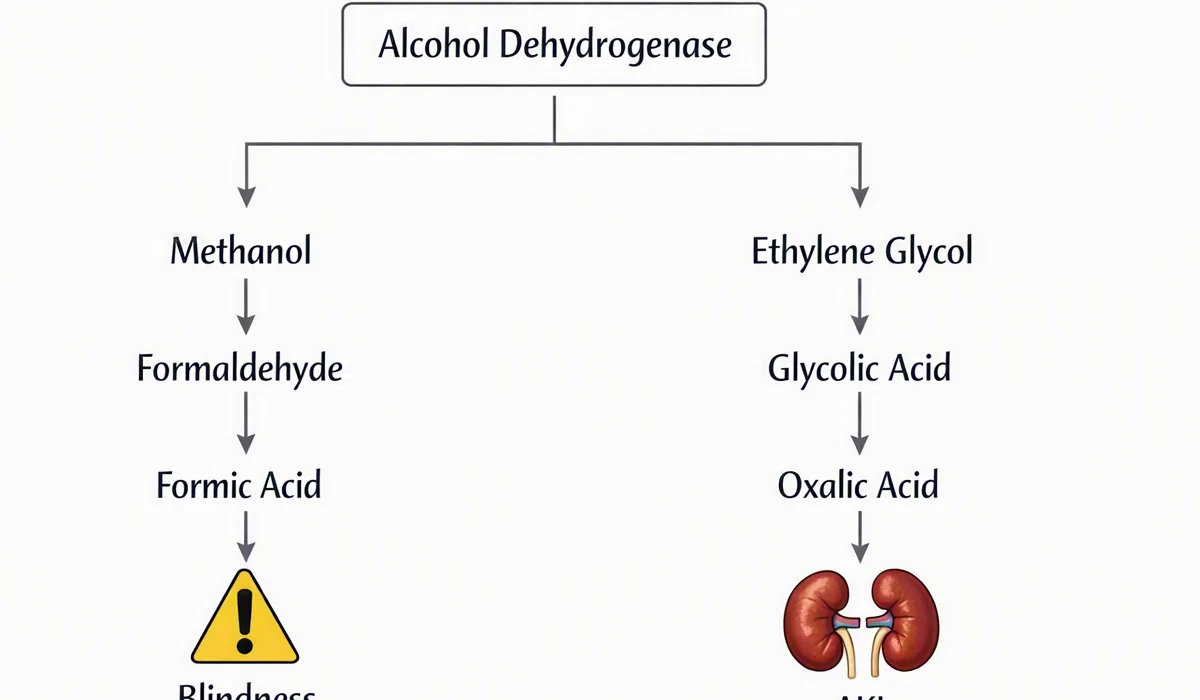
- Toxic alcohols — Ingestions such as methanol or ethylene glycol can generate acidic metabolites and cause severe metabolic derangement.
Additional causes may also be considered depending on the case, but these four are among the most common and clinically significant. A widened gap reflects the presence of unmeasured acids, so the task is to ask what acids are likely present and whether the clinical picture fits.
That is why the calculator is best used as part of a more complete workup rather than as a standalone result. The answer should be integrated with history, examination, and complementary labs. In many cases, the anion gap points the clinician toward targeted testing for lactate, ketones, kidney function, or toxic exposures.
How to Read Results in Clinical Context
The anion gap is made far more meaningful when considered alongside pH and arterial blood gas findings. A patient may have an increased gap on chemistry testing, but without acidemia on blood gas, the pattern may be mixed or partially compensated. Likewise, a decreased pH with a normal gap can still represent significant disease.
Respiratory response matters too. Respiratory compensation is the body’s attempt to lower carbon dioxide and limit the fall in pH during metabolic acidosis. The relationship between pH, bicarbonate, and carbon dioxide helps determine whether compensation is suitable or whether another process is present.
That is where the delta gap becomes valuable. Delta gap reasoning compares the rise in anion gap with the fall in bicarbonate to look for mixed acid-base disorders. If the gap has increased more than bicarbonate has fallen, there may be an additional metabolic alkalosis. If bicarbonate is lower than expected for the degree of gap elevation, a concurrent normal-gap acidosis may also be present.
This layered analysis is especially helpful in complex illness. A patient with infection, kidney dysfunction, and vomiting may have multiple overlapping acid-base disorders. In those situations, the calculator provides a starting point, but the final answer depends on the overall pattern of acid-base disorders.
Interpretation should always be practical: ask whether the patient has a clinically significant metabolic acidosis, whether the respiratory system is compensating appropriately, and whether the gap matches the suspected cause. The calculator helps organize the numbers, but the diagnosis comes from clinical judgment.
Limitations and Drawbacks of Anion Gap Calculation
As with any lab-based tool, the anion gap has limitations. A typical concern is lab error, which can skew the numbers and create a misleading result. If the value does not fit the clinical picture, retest and assess specimen quality before drawing conclusions.
Another important constraint is the influence of albumin. Without correction, a low albumin level can mask a widened gap. That means a patient with true acid accumulation may appear to have a normal result if the correction is not considered.
Paraproteinemia is an additional significant concern. Abnormal proteins can disturb the measured chemistry and change the expected gap. In some cases, these proteins may act as unexpected charged species and blur the usual pattern.
It is also important to remember that the gap reflects unmeasured anions, not a specific disease. A high number tells you that something acidic is accumulating, but it does not determine the cause. The clinician must still evaluate for lactate, ketones, renal dysfunction, and toxins, among other possibilities.
Finally, the normal range is not universal. Different laboratories and methods may use slightly different ranges, so always interpret the result using the local reference range. Small differences in assay design and reporting can affect what is considered normal.
FAQ About Anion Gap and Acidemia Evaluation
What is the anion gap calculator used for?
The anion gap calculator is used to estimate the gap from routine lab values and support evaluation of metabolic acidosis and acidemia. It helps clinicians identify whether the pattern suggests a normal gap or a widened gap and provides a starting point for acid-base interpretation.
What is a normal anion gap range?
The normal range varies by laboratory method, so the result should be compared with the local reference range. In general, a value that falls within the expected range suggests normal anion gap physiology, but clinical context still matters.
Why is it corrected the anion gap for albumin levels?
You correct for albumin because low albumin lowers the measured gap and can mask a true elevation. Albumin correction enhances detection of acid accumulation, especially in patients with hypoalbuminemia or critical illness.
What can cause a high anion gap in acidemia?
Common causes of a high gap include lactic acidosis, ketoacidosis, renal failure, and toxic alcohols. These conditions raise unmeasured anions and often produce high anion gap metabolic acidosis.
Can a normal anion gap still occur with metabolic acidosis?
Yes, it can. Normal anion gap metabolic acidosis is a recognized form of metabolic acidosis and can occur when bicarbonate is depleted or replaced by chloride. The acid-base picture must be assessed with pH, arterial blood gas, and the overall clinical context.